 |
| Tamagotchi |
In our short week we have troubled words such as “real” and “imaginary” and I have learned about concepts and trends I never knew existed; e.g. Tumblr, Tamagotchi, Sex Robots. And while I support a human’s right to choose how she or he wishes to socially engage, I cannot help but wonder what the long-term social effects of our increased exposure to technology, social media, and robots might mean for future relationships.
As a precursor, I do not romanticize face-to-face communication over online communication. But I do think they are different and that they do different things to people. The former is not categorically “better,” but I wish to recognize that people do adapt and evolve to their surroundings and when humans stop performing certain tasks, they may lose those skills. For instance, how many of us make our own clothes, grow our food, or write in cursive with a pencil and paper? While the first two examples are exceedingly archaic in the age of agribusiness, to write (or not to write) in cursive in the age of the computer is a very real paradigmatic-shifting debate happening right now.
 |
| Svedka Fem Bot |
Beyond penmanship, I have three areas of interest when it comes to the blurring of humans and technology: relationships, hierarchy, and environmental sustainability. My interest in relationships was sparked during the conversation about Sex Robots. After reflection, I wonder if Sex Robots have less to do with sex and more to do with our socialized desire for instant gratification. Finding a human sexual or romantic partner who meets our ideals can be difficult and may require a lot of work. However, robots are created for human consumption and always available.
While Sex Robots are not yet widely available, I do find hints of relational instant gratification through technology such as Twitter, Facebook, and Tamagochi. These items provide unlimited access to people and animals whereas traditional forms of communication may necessitate more patience - sending letters, traveling, and picking up dog poop. And it is a great thing that some technologies have aided many who may not have the ability to send a letter, travel, or care for a biological pet.
Yet, I do want to mark that technology ask that we perform these relational tasks differently and consequentially will compel us to treat others differently. By instantly gratifying ourselves both relationally and sexually through robotics, I wonder about the long-term effects this may have on how humans treat other humans and animals. Will we be more demanding of our partners to dress certain ways or manipulate their bodies? Will we get increasingly irritated when Fido poops on the carpet? And if we are already heading in this direction, why would we want to create robots that may further precipitate these damaging interactions?
 |
| Predator Drone |
If we never have to stand face-to-face with humans, will it make it easier to objectify them? I have never killed anyone, but I imagine that it is easier to do with a predator drone than having to plunge a knife into someone’s chest. Unfortunately, the creation of autonomous technology will facilitate us in questioning the positive and negative consequences.
My second interest is wondering whether or not hierarchies can be eliminated. This interest was generated through two items: toxic waste and turtles. When discussing robotics as a way to clean up toxic waste, I got “stuck” when ask to make the choice between sending in humans or sending in robots and how my choices reflect privilege.
My position is this: I will always support sending in robots. Currently, people who clean up waste are more likely to be poor and wield minimal social capital. However, if the wealthy people who created the spill have to clean it up, perhaps I’d have a different position.
Anyway, this pro-human position does not negate the interesting theoretical question posed by such a debate. What is the difference between a robot and a human and who gets to decide which entity is more valuable? And even then, what about turtles? When visiting turtles with her 10-year-old daughter Rebecca Turkle has a “robotic moment”:
“[Rebecca said,] ‘They could have used a robot.’ I was taken aback and asked what she meant. She said she thought it was a shame to bring the turtle all this way from its island home in the Pacific, when it was just going to sit there in the museum, motionless, doing nothing. Rebecca was both concerned for the imprisoned turtle and unmoved by its authenticity.”

This insight is rather impressive. Yet, when thinking about robotic autonomy, I start to inquire as to whether or not a robot would want to be locked up in a zoo any more than a biological turtle. If our core motivation for robotics is summarized by our human desire to clean waste, free turtles, and have sex, then it seems as if we are simply discovering new entities to subjugate rather than altering our systemic ways of moving through the world. Certainly humans can be nicer to the planet, animals, and robotics, but I’m not sure if we can cease being the stewards of these entities. Even if we make more compassionate choices toward other entities, these choices still place humans in the position of ultimate choice maker.
 |
| Mountain Top Removal |
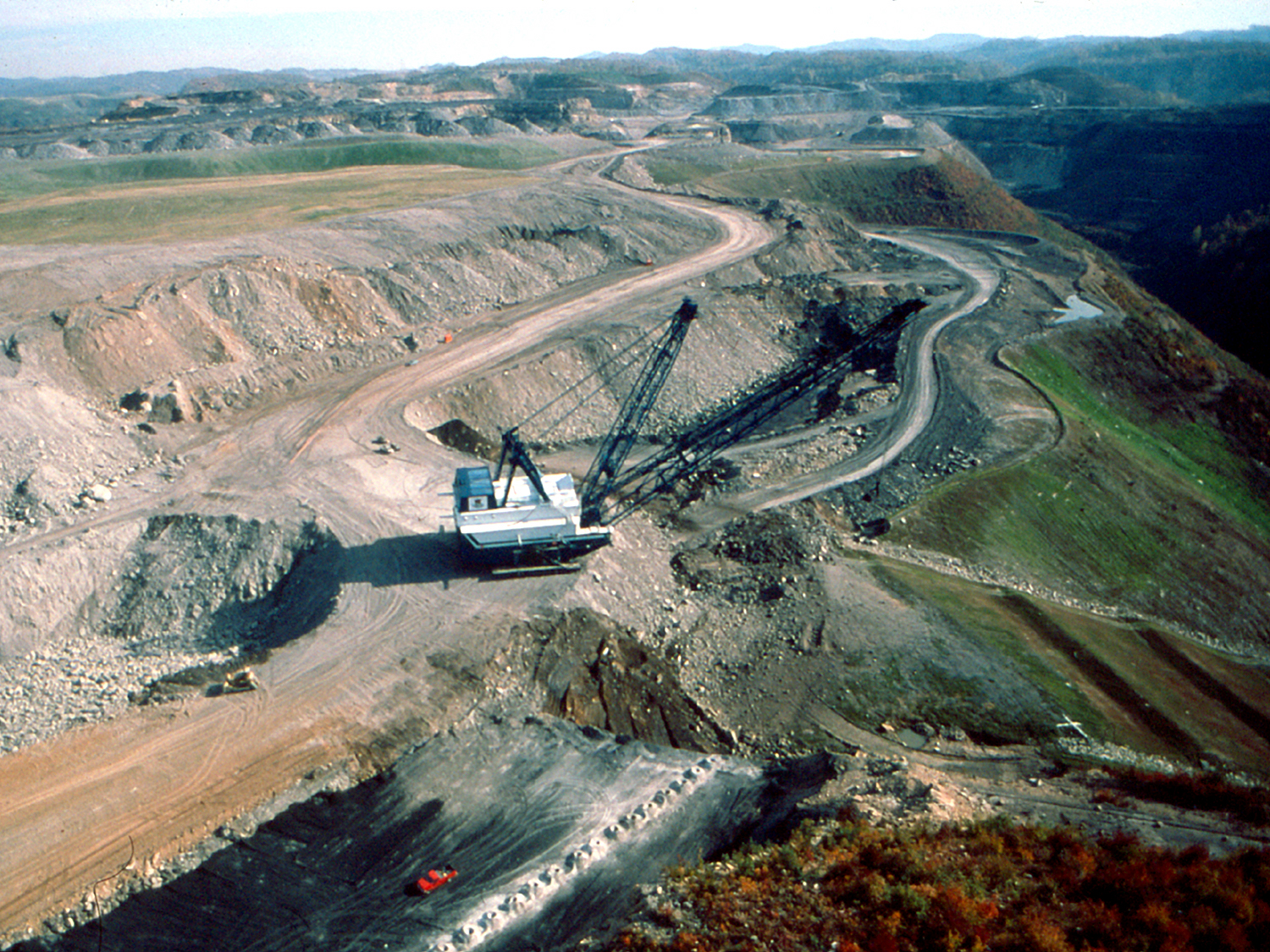
This leads to my final appeal of environmental sustainability.Currently, we only know how to explore technology by killing the planet through strip mining and mountain top removal. It saddens me to know that the advancement of technology facilitates our never-ending consumption and disposal of precious metals. Humans used to buy one phone and one typewriter for a lifetime. Now we replace them every year or two. Wendell Berry articulates this in his essay “Why I am not going to buy a computer,” which is easily, and ironically, found online.
I do not disparage technology. I send emails, use Facebook, and edit papers using “Backspace” instead of “Whiteout.” However, I cannot ignore the evidence suggesting that social media and robotics change our relationships. Unlike the direction Turkle seems to lean, I am not one to categorically label these relationships as “good” or “bad,” but with Turkle I do propose that socializing online has changed human relationships with other humans, animals, robotics, and the environment and we should be conscious of these changes when moving forward.


